

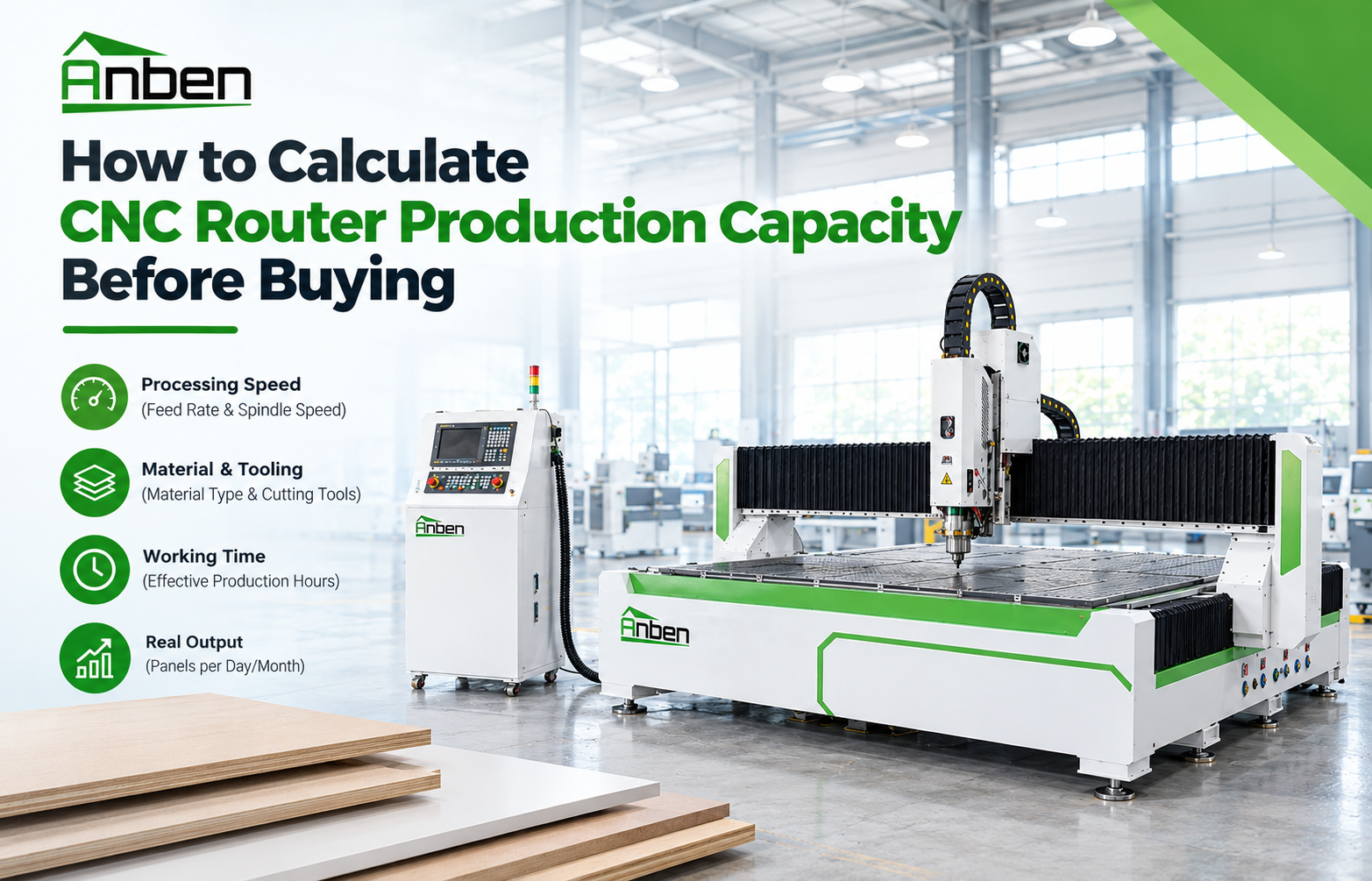
How to Calculate CNC Router Production Capacity Before Buying





Choosing a CNC router is not just about working area or spindle power. Understanding CNC router production capacity helps manufacturers select the right machine, estimate daily output, and improve production efficiency.
1. Calculate the Actual Machining Time
Start by estimating how long it takes to machine one workpiece or panel. Consider cutting time, tool changes, loading and unloading, positioning, and inspection.
Total Cycle Time = Machining Time + Tool Change Time + Loading and Unloading Time + Other Process Time
For example, if one panel requires 12 minutes of machining and 3 minutes for handling and tool changes, the total cycle time is 15 minutes.
2. Estimate Daily CNC Router Output
Use the following formula to estimate daily production capacity:
Daily Output = Available Production Time ÷ Cycle Time per Workpiece
If a CNC router operates for 8 hours per day, with a cycle time of 15 minutes per panel:
480 minutes ÷ 15 minutes = 32 panels per day.
This is the theoretical output. Actual production may be lower because of setup, maintenance, material changes, and other interruptions.
3. Consider the Factors That Affect Productivity
Several factors influence CNC router production capacity:
Working Area: Choose a suitable table size for your panel dimensions and production layout.
Spindle Performance: Appropriate spindle power and cutting parameters help achieve efficient machining.
Automatic Tool Changer (ATC): Automatic tool changes reduce manual intervention when jobs require multiple tools.
Loading and Unloading: Efficient material handling reduces non-cutting time between jobs.
Workholding and Positioning: Reliable vacuum holding or positioning systems help maintain consistent production.
Operator Skills and Programming: Optimized toolpaths and proper machine operation reduce unnecessary cycle time.
The best configuration depends on your materials, part geometry, batch size, and production workflow.
4. Calculate Realistic Production Capacity
Theoretical output does not represent actual daily production. To make a more practical estimate, apply an expected utilization factor.
Estimated Actual Output = Theoretical Output × Expected Utilization Rate
For example, if theoretical output is 32 panels per day and the expected utilization rate is 85%, estimated output is approximately 27 panels per day.
Use your own production data whenever possible, and allow for setup time, downtime, and variations between jobs.
5. Choose a CNC Router Based on Your Production Needs
Before purchasing a CNC router, define your daily output target, panel dimensions, materials, and typical machining operations.
For high-volume woodworking, an ATC CNC router can reduce manual tool changes. For large panels or specialized ACP/ACM processing, consider the required working dimensions, machining method, and material-handling workflow.
ANBEN offers horizontal CNC routers and vertical CNC router solutions for different manufacturing requirements. Evaluate the complete production process—not just cutting speed—to identify the right configuration for your factory.
Need help estimating your CNC router production capacity? Contact ANBEN with your material type, panel dimensions, machining operations, and daily output target to discuss a suitable machine configuration.
 CNC Milling vs. CNC Routing: Key Differences and Applications
- How to Prevent Chipping and Rough Edges in CNC Routing
- How to Calculate CNC Router Production Capacity Before Buying
- How Does V-Grooving Work on ACP and ACM Panels?
- How to Use an ATC CNC Router: A Step-by-Step Guide
- How to Calculate the ROI of a CNC Router Before Buying
- CNC Router Bits Explained: Types, Applications, and How They Work
- How to Set Z-Axis Zero on a CNC Router
Related Products
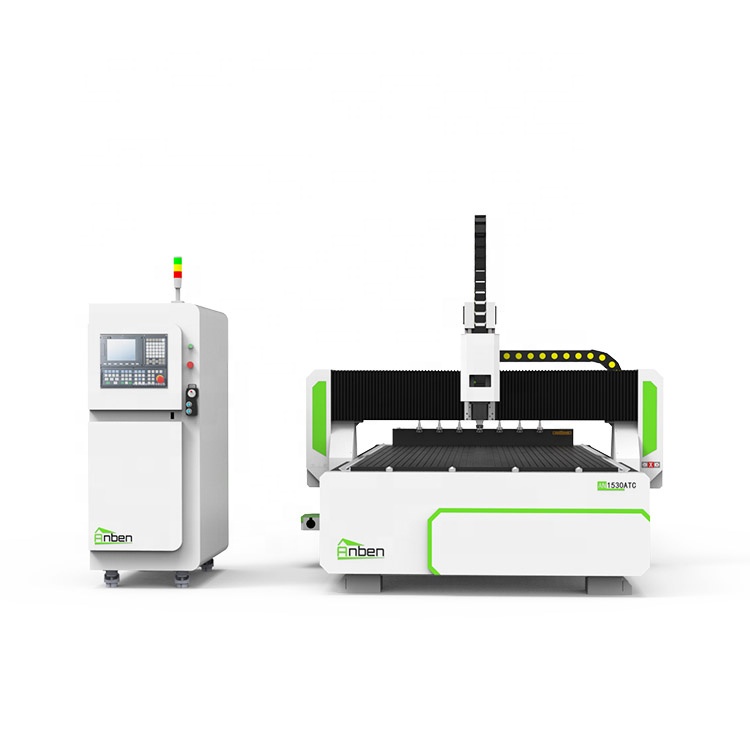
 AN1530ATC Automatic Tool ChangeAnben ATC (Automatic Tool Change)CNC router is popularly used in woodworking, making signs, molds making, art crafts making, etc. The automatic tool changer magazine carries 8-16 cutters. It can save tool change time,more efficient!
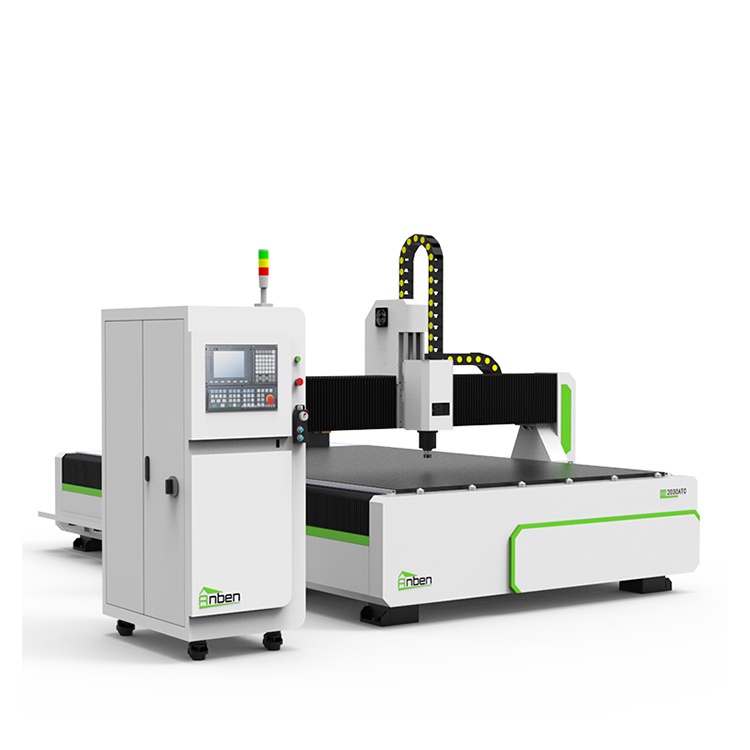
 AN2030ATC Automatic Tool ChangeAnben ATC (Automatic Tool Change)CNC router is popularly used in woodworking, making signs, molds making, art crafts making, etc. The automatic tool changer magazine carries 8-16 cutters. It can save tool change time,more efficient!
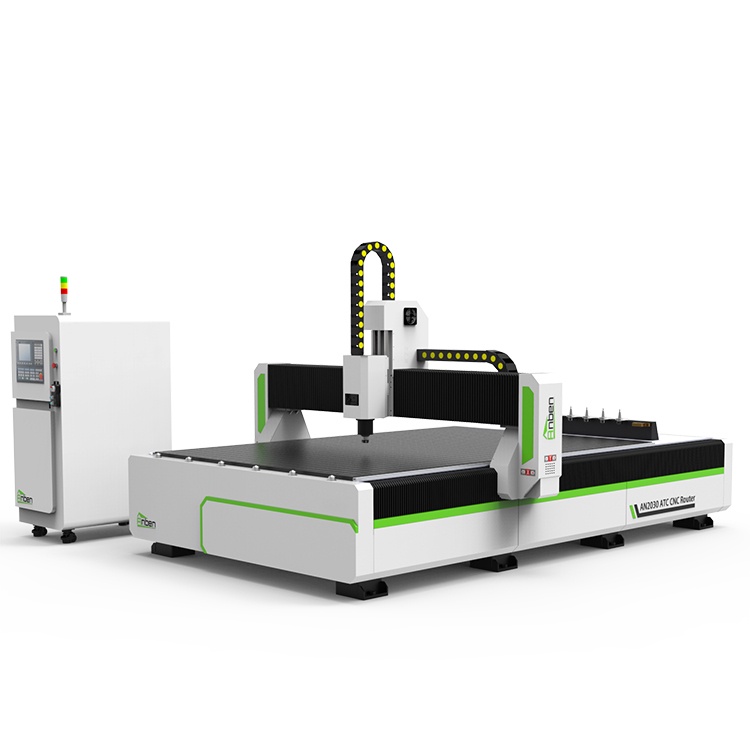
 AN2040ATC Automatic Tool ChangeAnben ATC (Automatic Tool Change)CNC router is popularly used in woodworking, making signs, molds making, art crafts making, etc. The automatic tool changer magazine carries 8-16 cutters. It can save tool change time,more efficient!
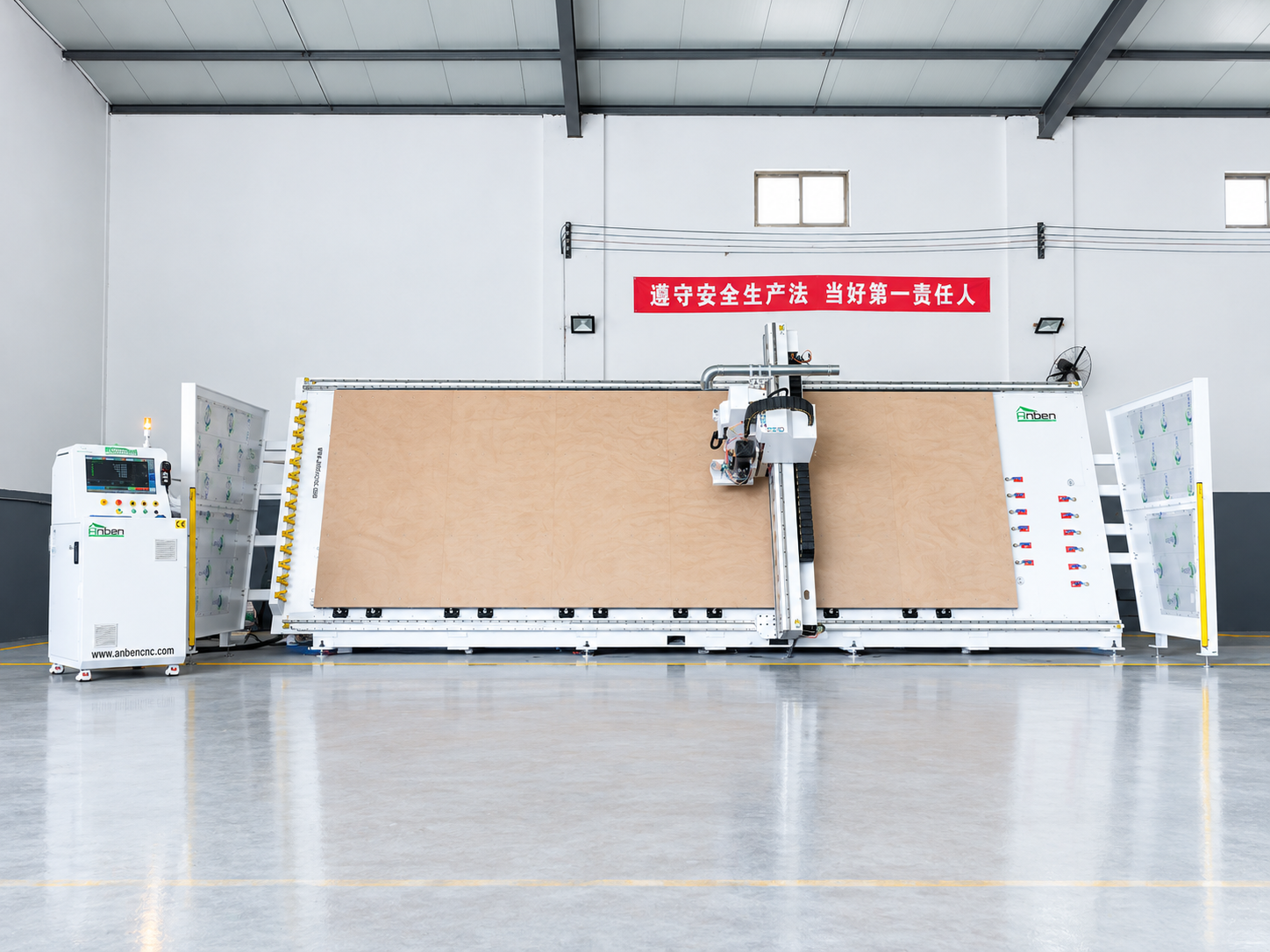
 V-2162 Vertical cnc routerThe vertical cnc significantly reduces the machine’s floor space. It is equipped with 8 sets of ATC tool magazines and other auxiliary devices such as vacuum pump, saw blade,aggregate head, positioning systems, etc. The Vertical cnc can cutting,grooving,engraving,drilling for various types of aluminum composite boards, acrylic boards, fiber boards and other boards. It is suitable for construction facades,cladding ,advertising signs,furniture manufacturing and other industries.
Get in touch

Anben Industrial – Founded in 2017, with a pure engineering spirit, providing trustworthy CNC solutions, born for long-term stable performance.
Contact