

How to Choose the Right CNC Router Bit for Different Materials





Choosing the right CNC router bit is important for achieving clean edges, accurate dimensions, and stable machining results. Different materials require different cutting tools because hardness, thickness, density, and cutting characteristics can vary significantly.
For ANBEN CNC router users, selecting the correct bit according to the material and machining operation can also help reduce tool wear and improve production efficiency.
1. Router Bits for Solid Wood
Solid wood can be cut and carved with different types of CNC router bits depending on the application.
Recommended options:
Upcut bits for efficient chip removal
Downcut bits for cleaner top surfaces
Compression bits for reducing edge chipping
V-bits for lettering and engraving
For deep cutting or high-production woodworking, choose a suitable tool diameter and cutting geometry based on the wood type and workpiece thickness.
2. Router Bits for MDF and Plywood
MDF and plywood are widely used in furniture and cabinet production.
For MDF:
Compression or carbide end mills are commonly used for clean panel cutting and good edge quality.
For plywood:
Compression bits can help reduce chipping on both the top and bottom surfaces.
Always consider the number of flutes, tool diameter, cutting depth, feed rate, and spindle speed together.
3. Router Bits for Acrylic and Plastics
Acrylic requires good chip evacuation because excessive heat can melt the material.
Recommended options:
Single-flute O-flute bits
Polished cutting tools
Upcut bits for efficient chip removal
Use a sharp tool and appropriate cutting parameters to reduce heat buildup and melting.
4. Router Bits for PVC and Composite Materials
PVC and other plastic-based materials can also require tools designed for efficient chip removal.
A sharp carbide bit with suitable flute geometry can help produce cleaner cuts.
Avoid excessive cutting heat and regularly check the tool for material buildup.
5. Router Bits for Aluminum
Some CNC routers can process aluminum when the machine configuration, spindle, tooling, and cutting parameters are suitable.
For aluminum, use cutting tools designed specifically for non-ferrous metals.
Important:
Do not use the same cutting parameters used for wood. Spindle speed, feed rate, cutting depth, lubrication or cooling requirements, and tool geometry should be selected according to the specific aluminum application.
6. Choose the Bit According to the Operation
The material is only one part of tool selection.
For Cutting:
Use an end mill or compression bit suitable for the material.
For Engraving:
V-bits are commonly used for letters, lines, and decorative details.
For 3D Carving:
Ball nose bits are suitable for curved surfaces and detailed relief work.
For Edge Finishing:
Choose a tool designed to achieve the required edge profile.
Common Mistakes to Avoid
Using One Bit for Every Material
A tool that works well on wood may not be suitable for acrylic, plastics, or aluminum.
Ignoring Tool Wear
A dull bit can increase cutting force, heat, vibration, and poor surface quality.
Using Incorrect Parameters
Tool selection and cutting parameters must work together. Changing the tool without adjusting the machining parameters may not solve cutting problems.
Excessive Tool Stick-Out
Long tool extension can increase vibration and reduce cutting stability. Keep the tool extension as short as practical.
Quick Selection Guide
Material
Final Tips
The best CNC router bit depends on material, machining operation, workpiece thickness, tool diameter, and cutting parameters.
Before starting production, make sure the bit is sharp, securely installed, and suitable for the material. Test the selected tool and parameters on a sample piece when working with a new material.
For ANBEN CNC router users, the correct combination of tool + spindle + feed rate + cutting depth + workholding is the key to achieving stable and high-quality machining results.
 Daily CNC Router Maintenance Checklist for Operators
- Horizontal or Vertical CNC Router for Large Panel Production?
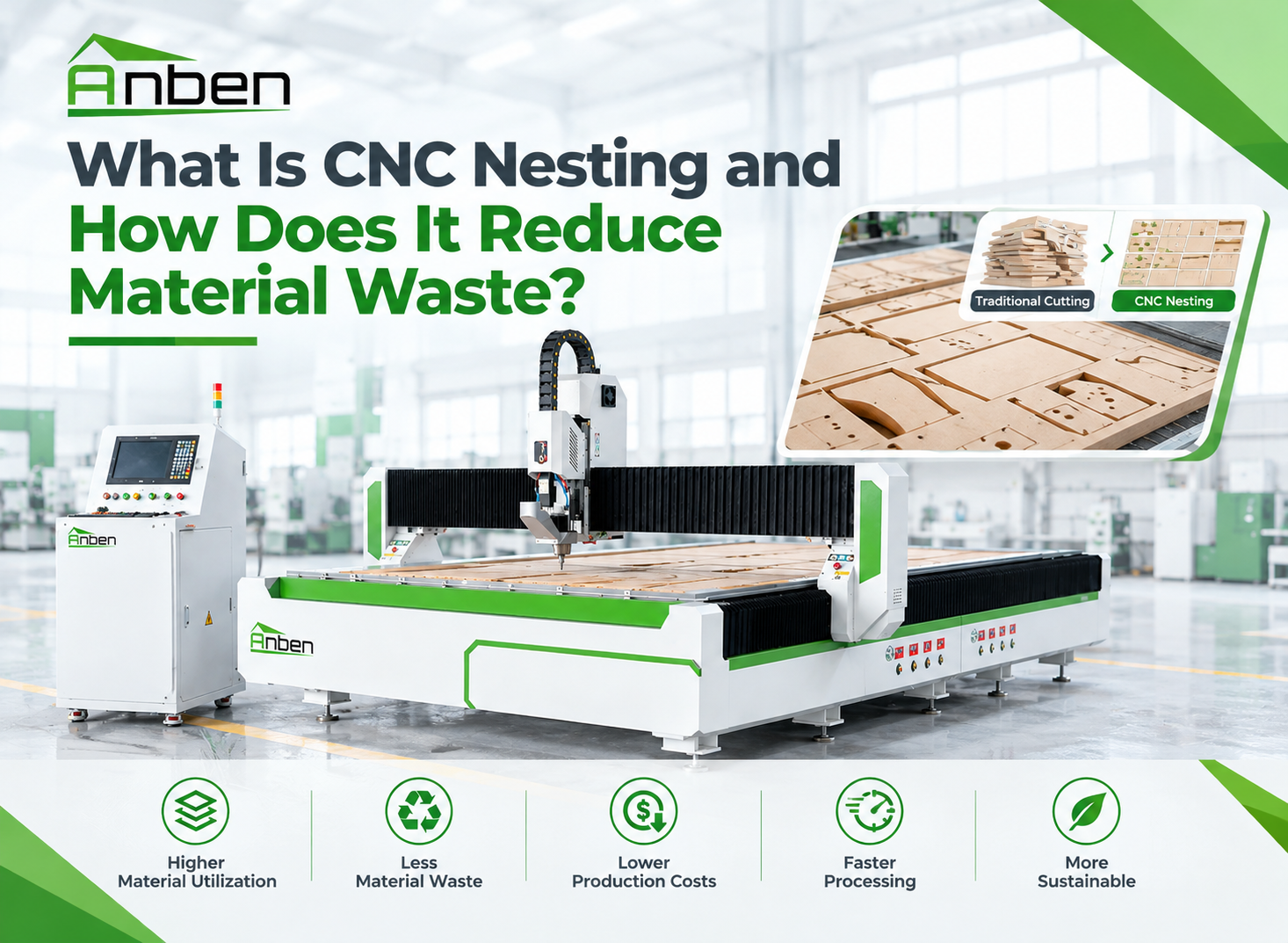
 What Is CNC Nesting and How Does It Reduce Material Waste?
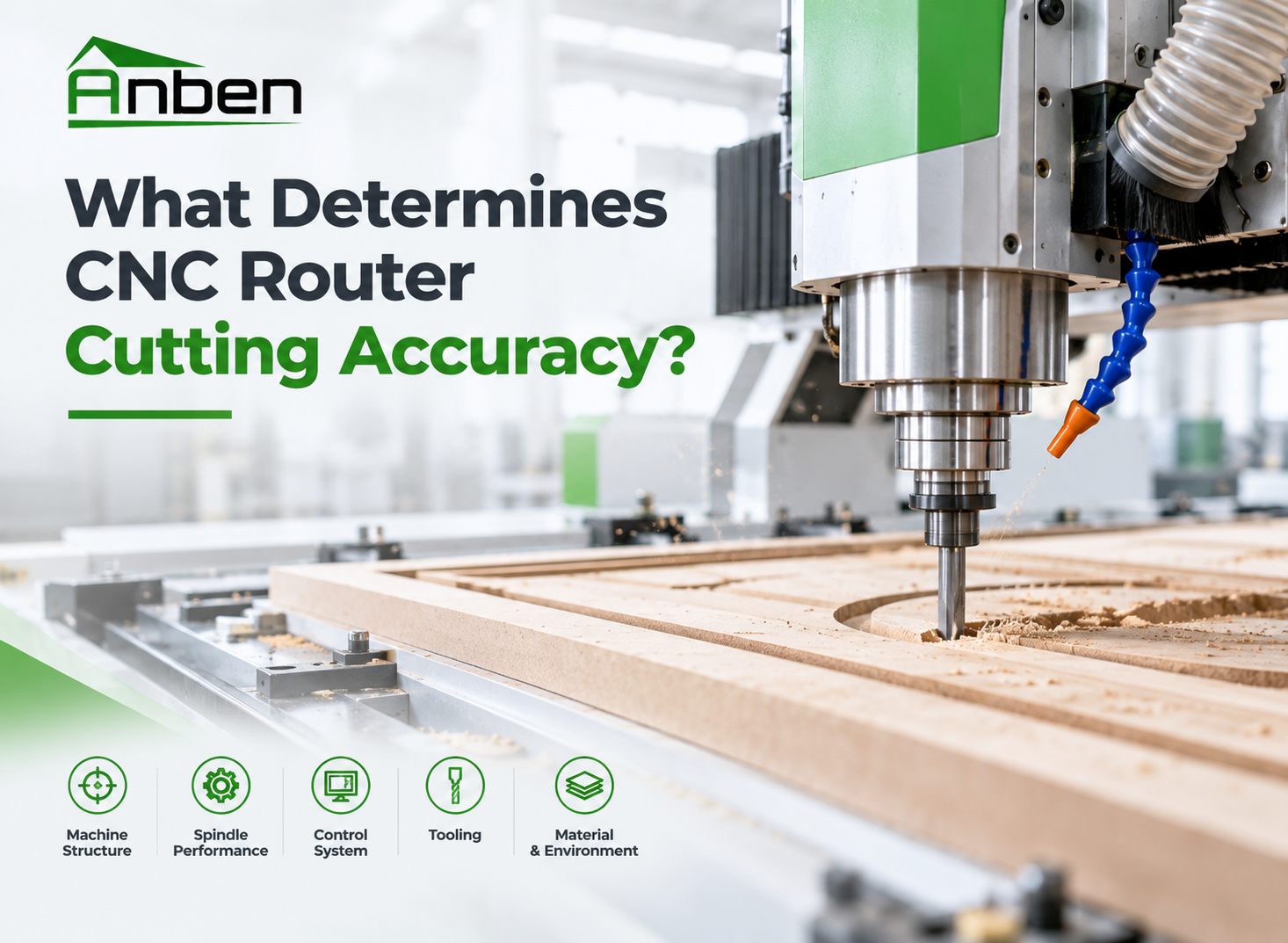
- What Determines CNC Router Cutting Accuracy?
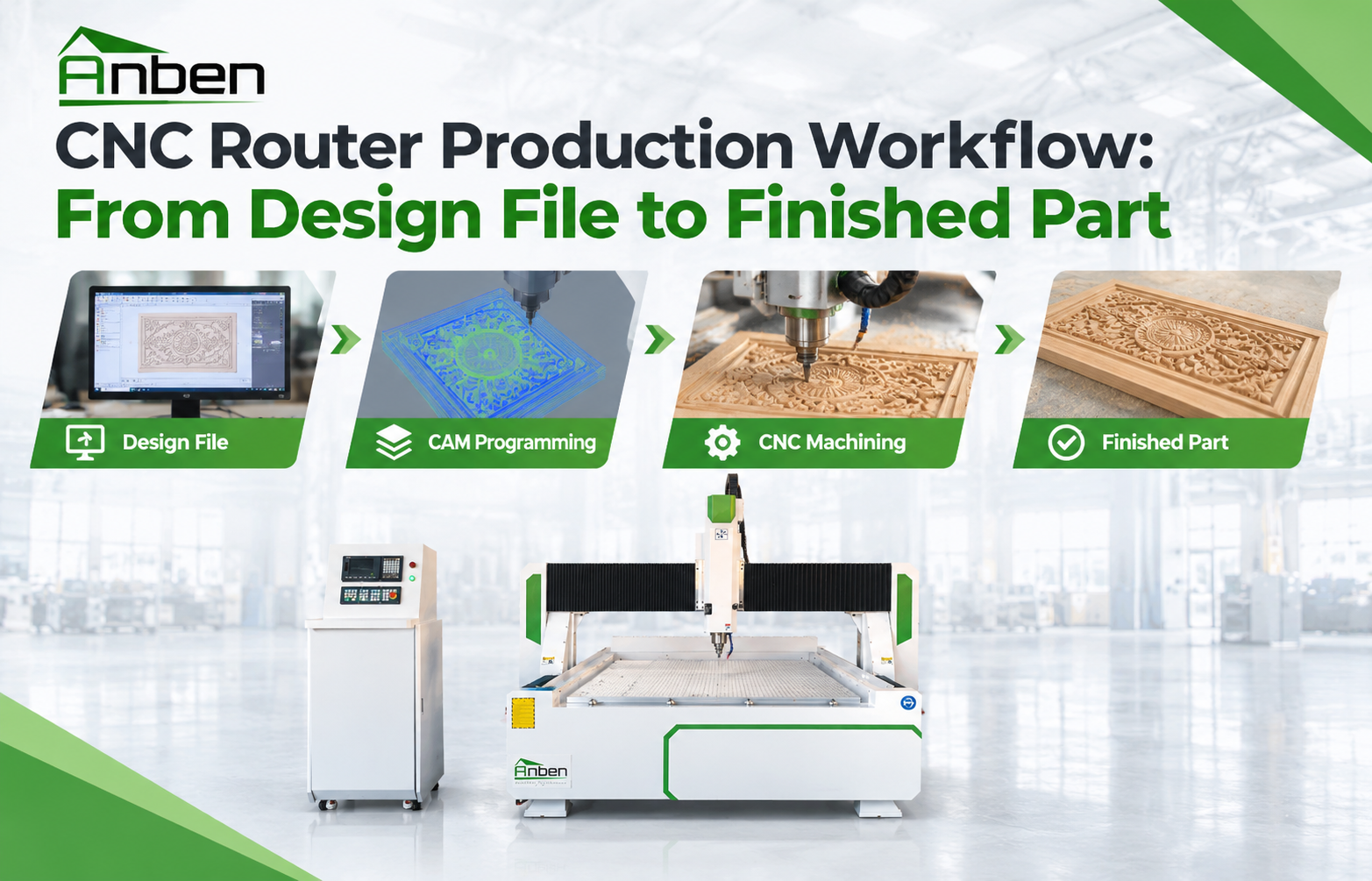
 CNC Router Production Workflow: From Design File to Finished Part
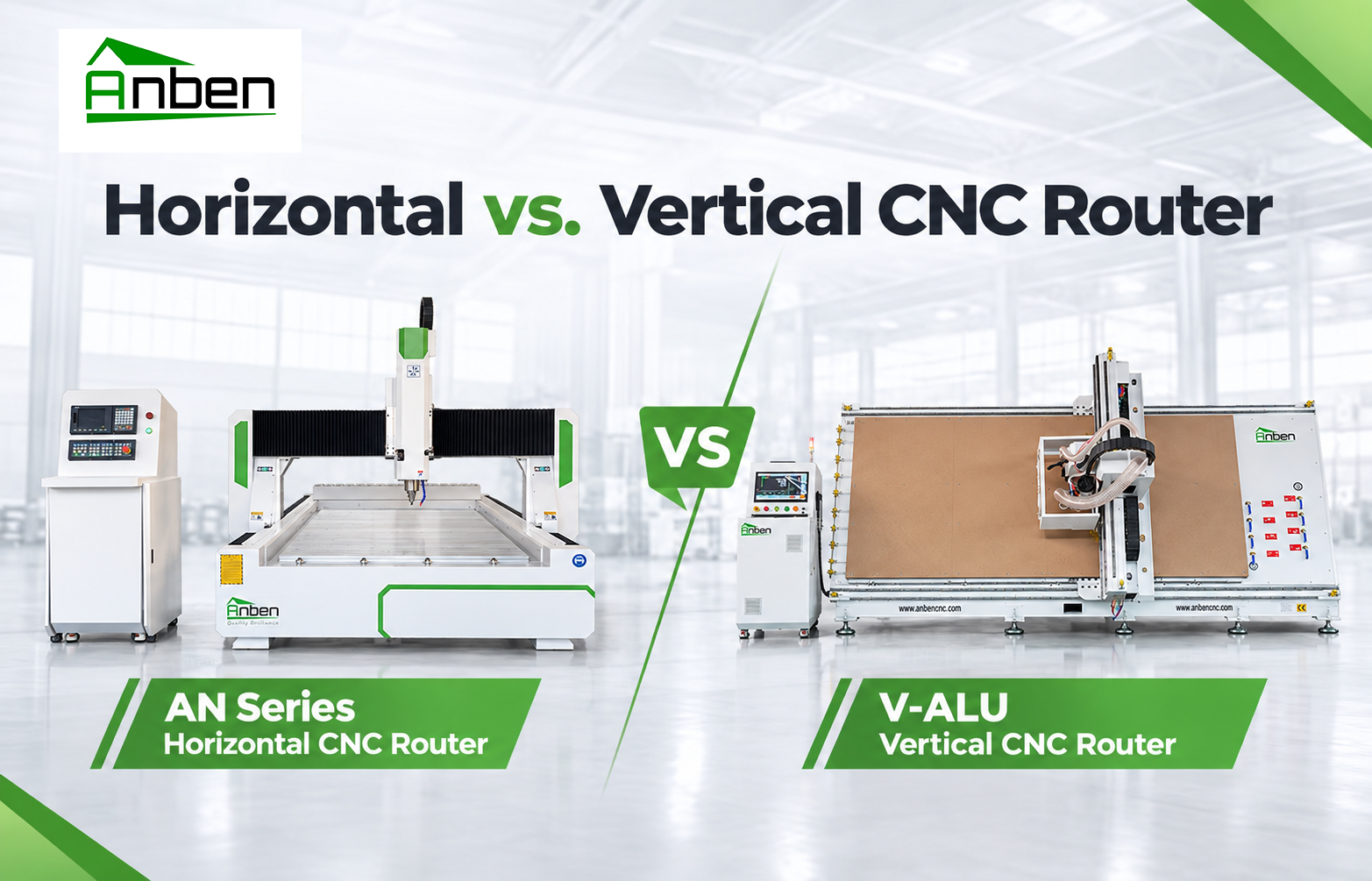
- Horizontal vs. Vertical CNC Router: Which One Is Right for You?
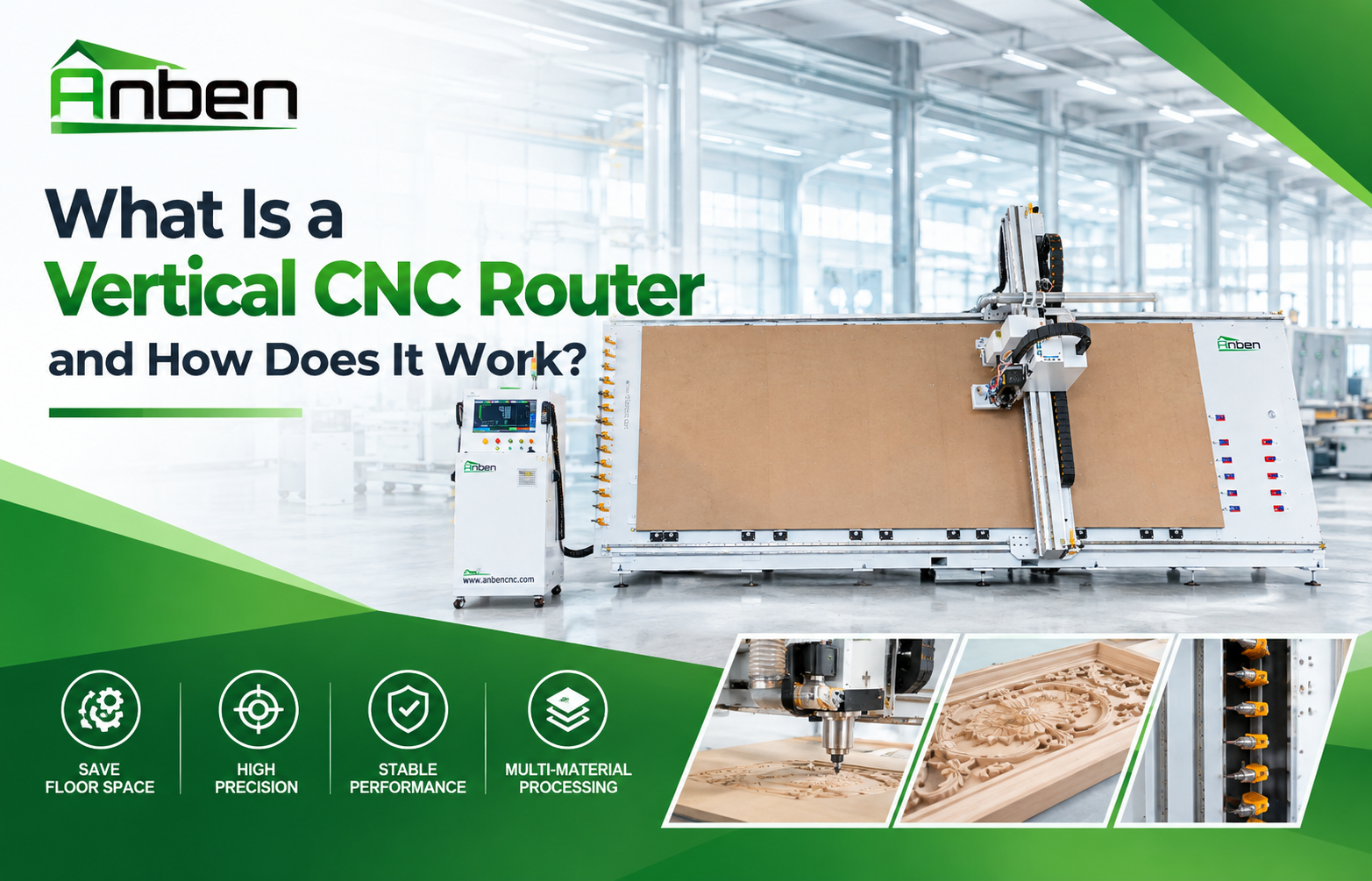
- What Is a Vertical CNC Router and How Does It Work?
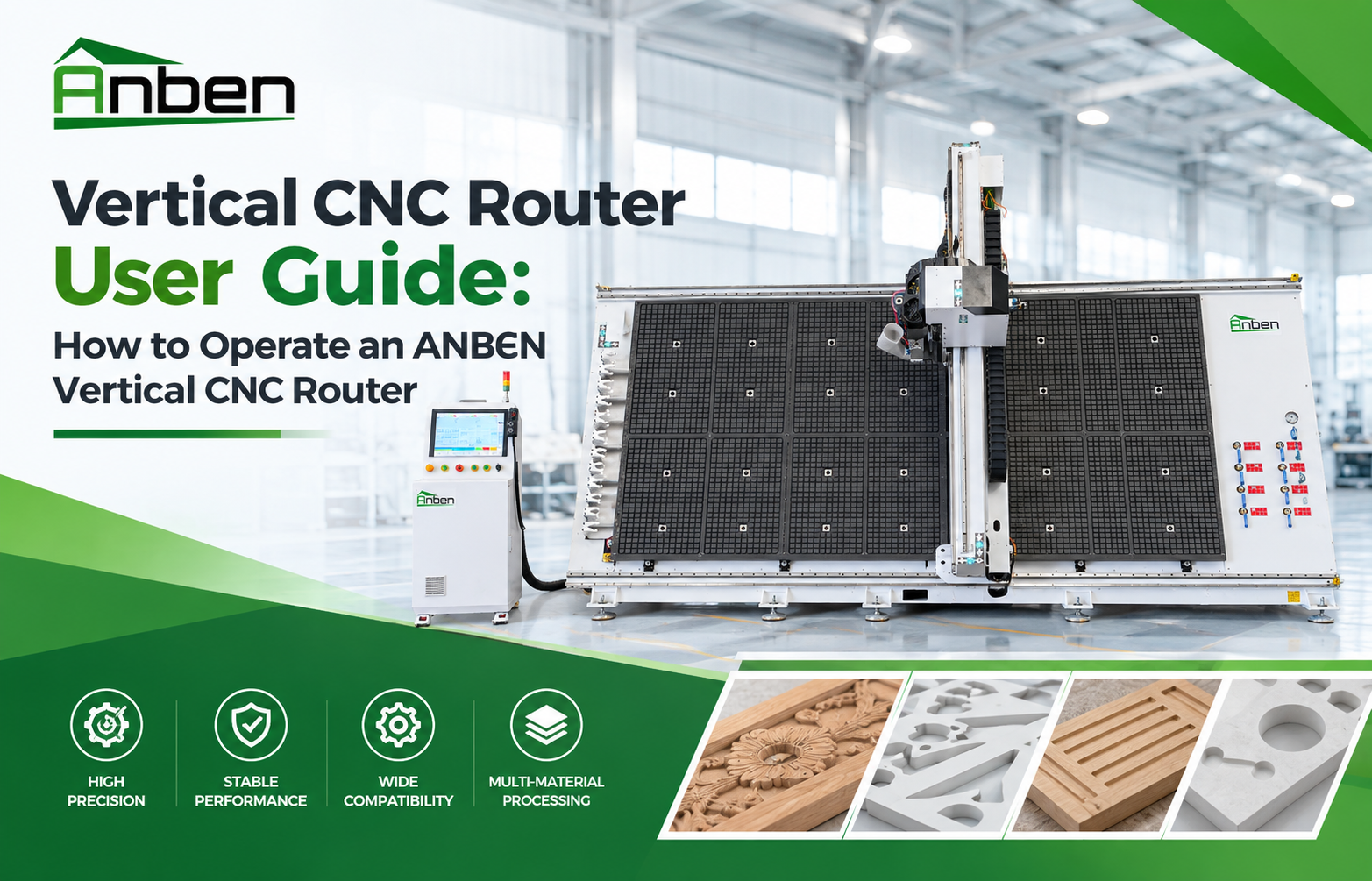
- Vertical CNC Router User Guide: How to Operate an ANBEN Vertical CNC Router

Related Products
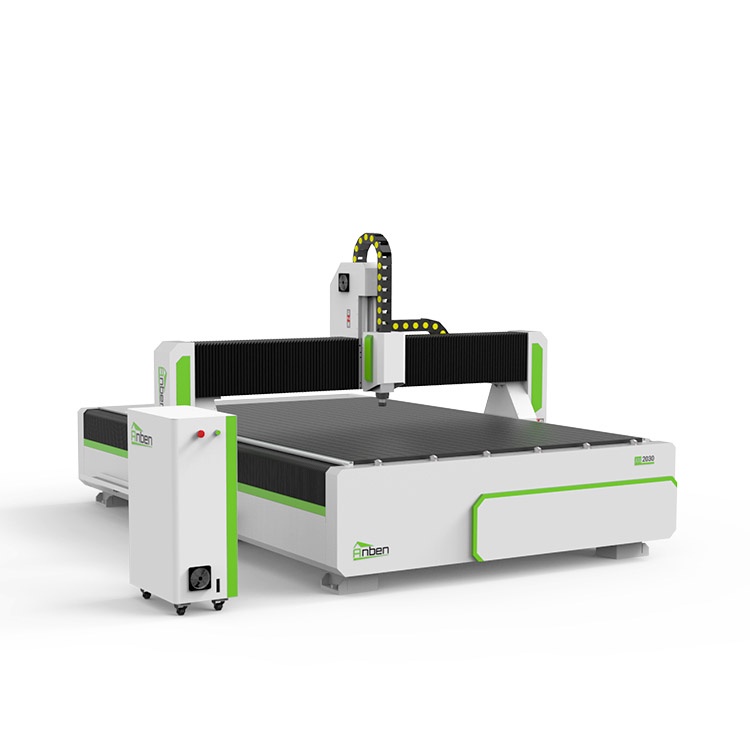
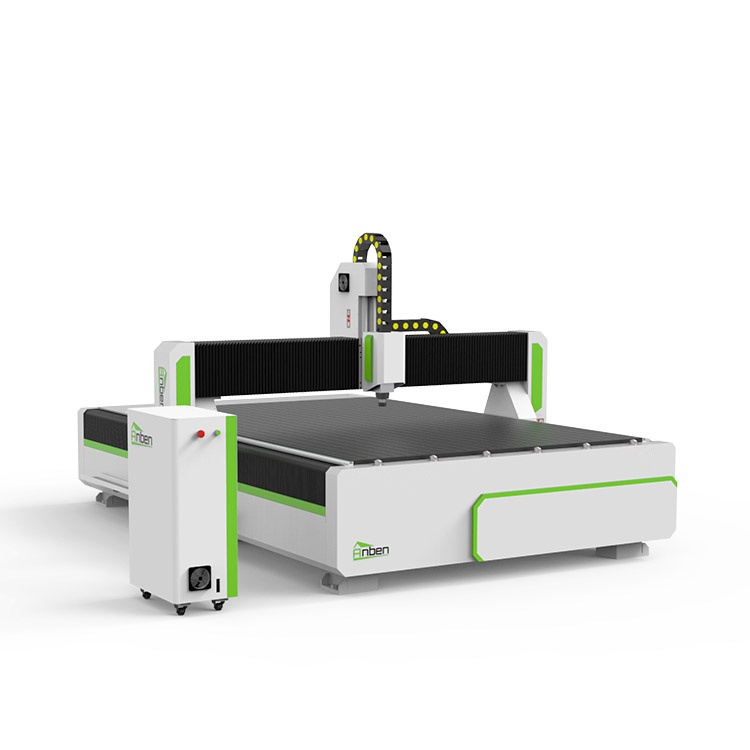
 AN2030 Manual Tool ChangeThe Anben MTC(Manual tool change)-- a professional yet affordable 3 axis CNC wood router, designed for woodworking shops, cabinet manufacturers, and industrial workshops. This budget-friendly CNC router delivers high precision and durability for wood machining, acrylic cutting, aluminum cutting, sign making, and furniture production.
 AN2040 Manual Tool ChangeThe Anben MTC(Manual tool change)-- a professional yet affordable 3 axis CNC wood router, designed for woodworking shops, cabinet manufacturers, and industrial workshops. This budget-friendly CNC router delivers high precision and durability for wood machining, acrylic cutting, aluminum cutting, sign making, and furniture production.
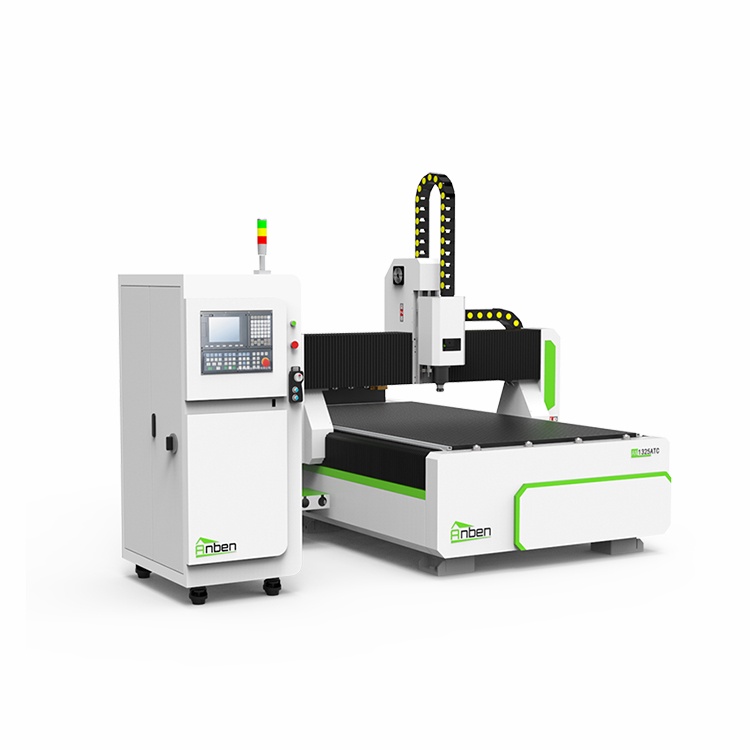
 AN1325ATC Automatic Tool ChangeAnben ATC (Automatic Tool Change)CNC router is popularly used in woodworking, making signs, molds making, art crafts making, etc. The automatic tool changer magazine carries 8-16 cutters. It can save tool change time,more efficient!
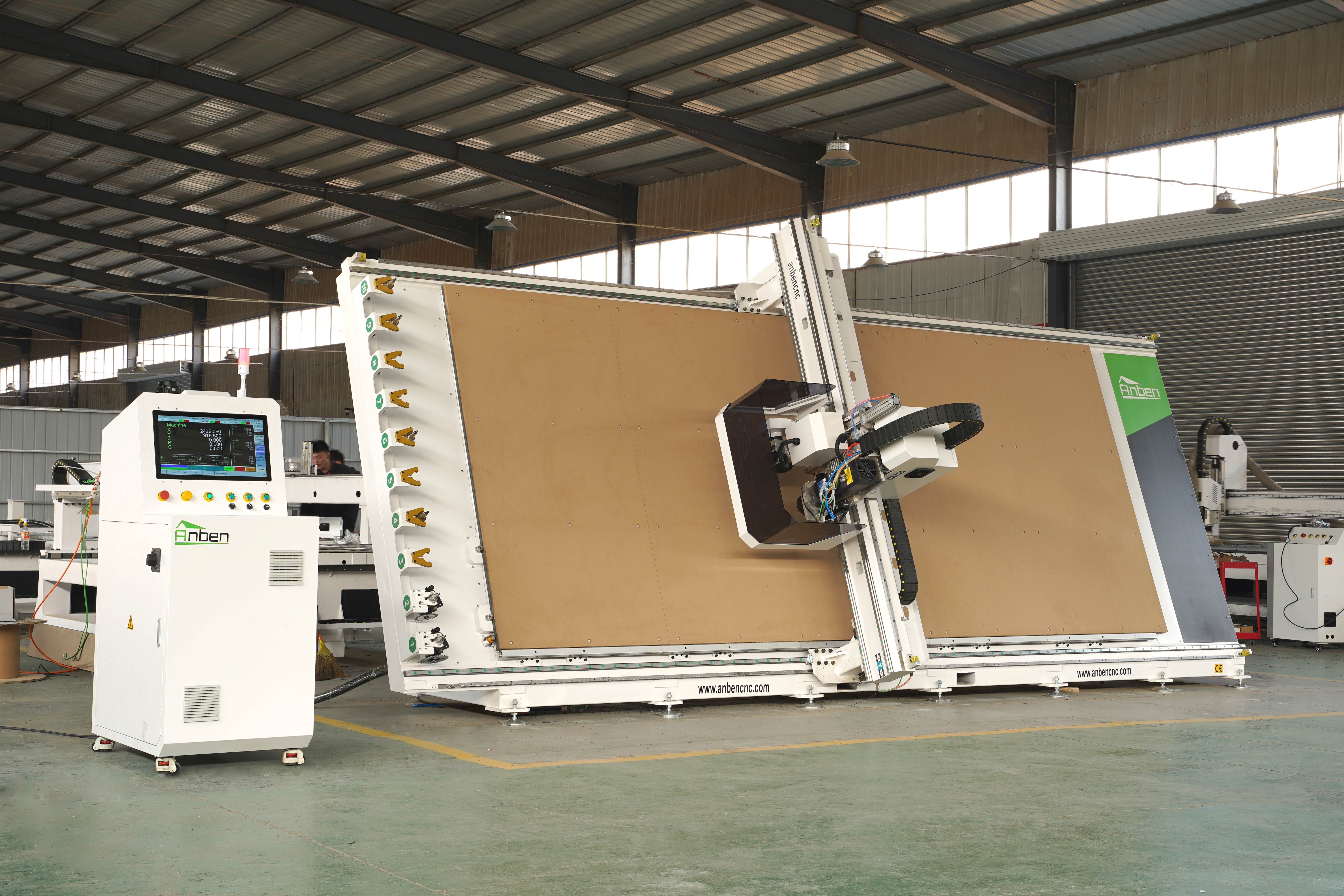
 V-2151 Vertical cnc routerThe vertical cnc significantly reduces the machine’s floor space. It is equipped with 8 sets of ATC tool magazines and other auxiliary devices such as vacuum pump, saw blade,aggregate head, positioning systems, etc. The Vertical cnc can cutting,grooving,engraving,drilling for various types of aluminum composite boards, acrylic boards, fiber boards and other boards. It is suitable for construction facades,cladding ,advertising signs,furniture manufacturing and other industries.
Get in touch

Anben Industrial – Founded in 2017, with a pure engineering spirit, providing trustworthy CNC solutions, born for long-term stable performance.
Contact