

Horizontal vs. Vertical CNC Router: Which One Is Right for You?





Choosing the right CNC router is not only about spindle power or machine size. The machine structure also affects material loading, working space, machining applications, and production workflow.
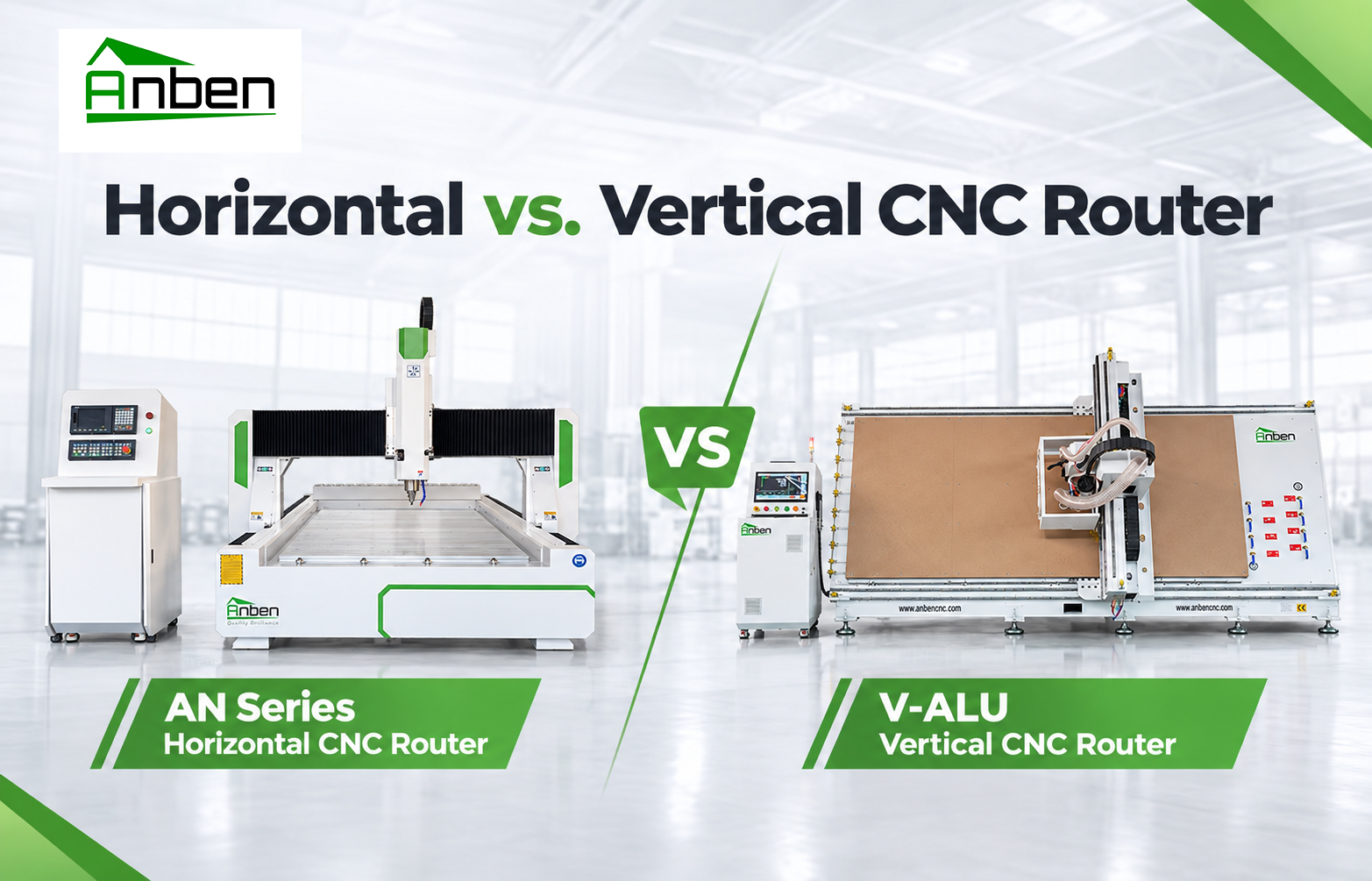
The two common structures are horizontal CNC routers and vertical CNC routers. ANBEN provides both solutions: the AN Series Horizontal CNC Router and the V-ALU Series Vertical CNC Router, designed for different production requirements.
What Is a Horizontal CNC Router?
A horizontal CNC router uses a flat working table where the material is positioned horizontally during machining.
This structure is widely used for:
Woodworking and furniture production
Cabinet making
Sign making
Acrylic and plastic processing
MDF and plywood cutting
General CNC routing
ANBEN AN Series machines are available in different working sizes and configurations, including manual tool-change and ATC CNC router options. This makes the horizontal structure suitable for workshops that need flexible machining for different materials and products.
What Is a Vertical CNC Router?
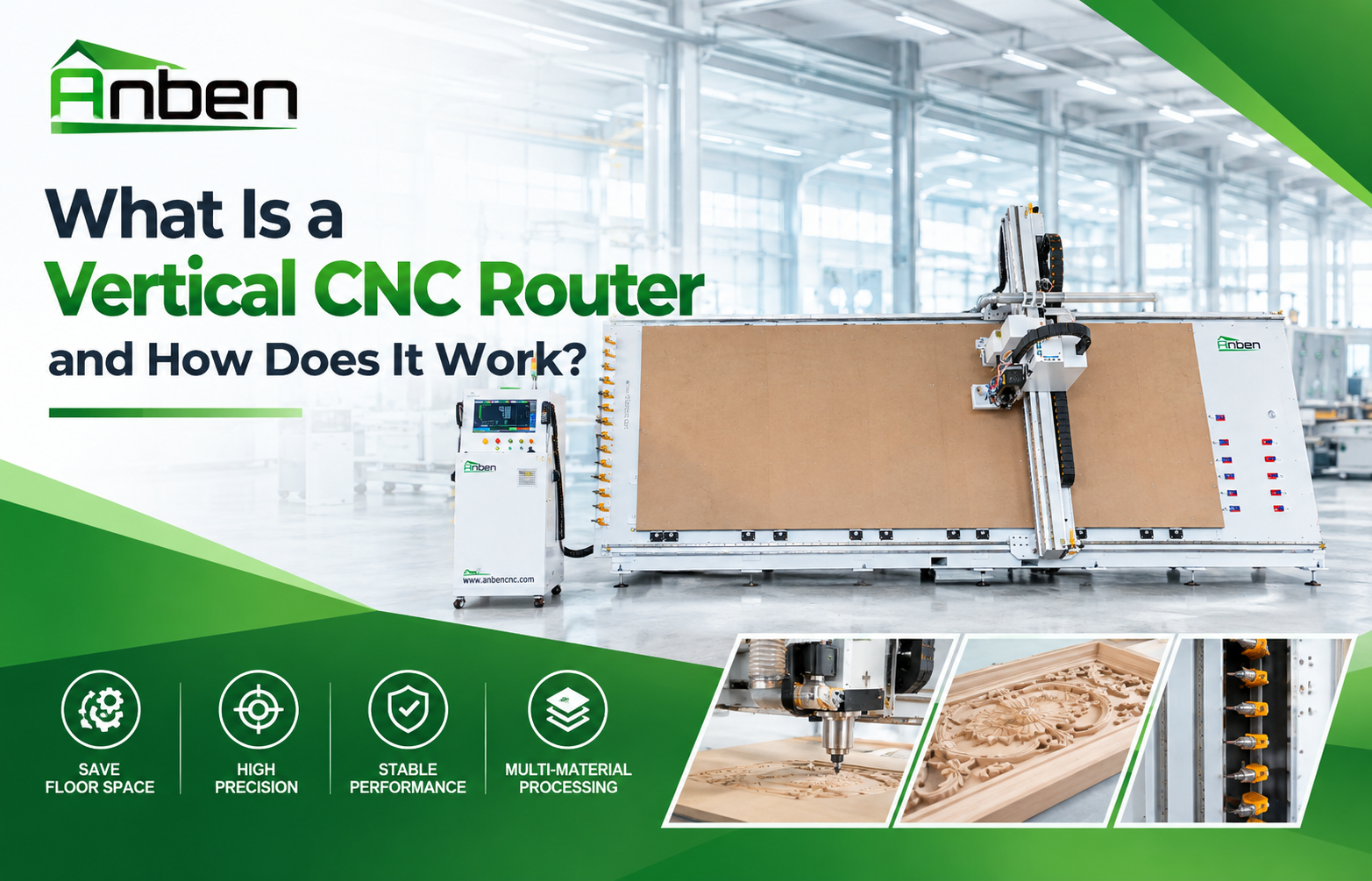
A vertical CNC router holds the panel in a vertical working position. Instead of placing a large sheet flat on a traditional CNC table, the material is processed against the vertical structure.
This design is particularly useful for large-format panel processing and workshops where floor space is important.
The ANBEN V-ALU Series is designed for large-panel machining, including cutting, milling, drilling, nesting, and V-grooving. Optional configurations include an Automatic Tool Changer, C Axis + Aggregate Units, and Becker Vacuum Pump.
Horizontal vs. Vertical CNC Router: Key Differences
The right choice depends on the complete production process rather than one machine specification.
When Should You Choose a Horizontal CNC Router?
A horizontal CNC router may be suitable when your main production involves woodworking, furniture, cabinets, signs, MDF, plywood, acrylic, or general sheet processing.
Consider a horizontal CNC router when:
Your materials fit comfortably on a flat CNC table.
You need a traditional CNC routing workflow.
Your production includes furniture or cabinet components.
You need manual or automatic tool changing.
Your workshop has enough floor space for the required working area.
ANBEN AN Series models provide different working sizes and configurations for these applications.
When Should You Choose a Vertical CNC Router?
A vertical CNC router may be more suitable when you regularly process large panels and need to use workshop space efficiently.
Consider a vertical CNC router when:
You process large-format panels.
Floor space is limited.
Your applications include ACP, ACM, aluminum, or architectural panels.
You need cutting, drilling, milling, or V-grooving.
Large-panel loading and handling are important parts of your workflow.
ANBEN V-ALU machines are designed around large-panel processing and space-saving vertical installation.
Which CNC Router Should You Choose?
Start with four questions:
1. What material do you process?
Wood and furniture production may favor a horizontal CNC workflow, while ACP, ACM, aluminum, and large architectural panels may benefit from a vertical CNC solution.
2. What is your largest panel size?
Choose the machine according to your actual maximum workpiece dimensions, not only your most common sheet size.
3. What operations do you need?
Cutting, drilling, engraving, routing, grooving, and multi-tool machining may require different machine configurations.
4. How much workshop space do you have?
For large-format production, machine layout can significantly affect material handling and floor-space utilization.
ANBEN Horizontal and Vertical CNC Solutions
ANBEN offers both Horizontal CNC Router and Vertical CNC Router solutions.
The AN Series focuses on horizontal CNC machining for woodworking, furniture, cabinetry, advertising, and general routing applications.
The V-ALU Series focuses on vertical CNC machining for large-format panel processing, including ACP, ACM, aluminum, and architectural applications.
The key is to select the machine structure according to your material, panel size, machining process, production volume, and available workshop space.
 Horizontal vs. Vertical CNC Router: Which One Is Right for You?
- What Is a Vertical CNC Router and How Does It Work?
- Vertical CNC Router User Guide: How to Operate an ANBEN Vertical CNC Router
- Vertical CNC Router Buying Guide: How to Choose the Right ANBEN Model
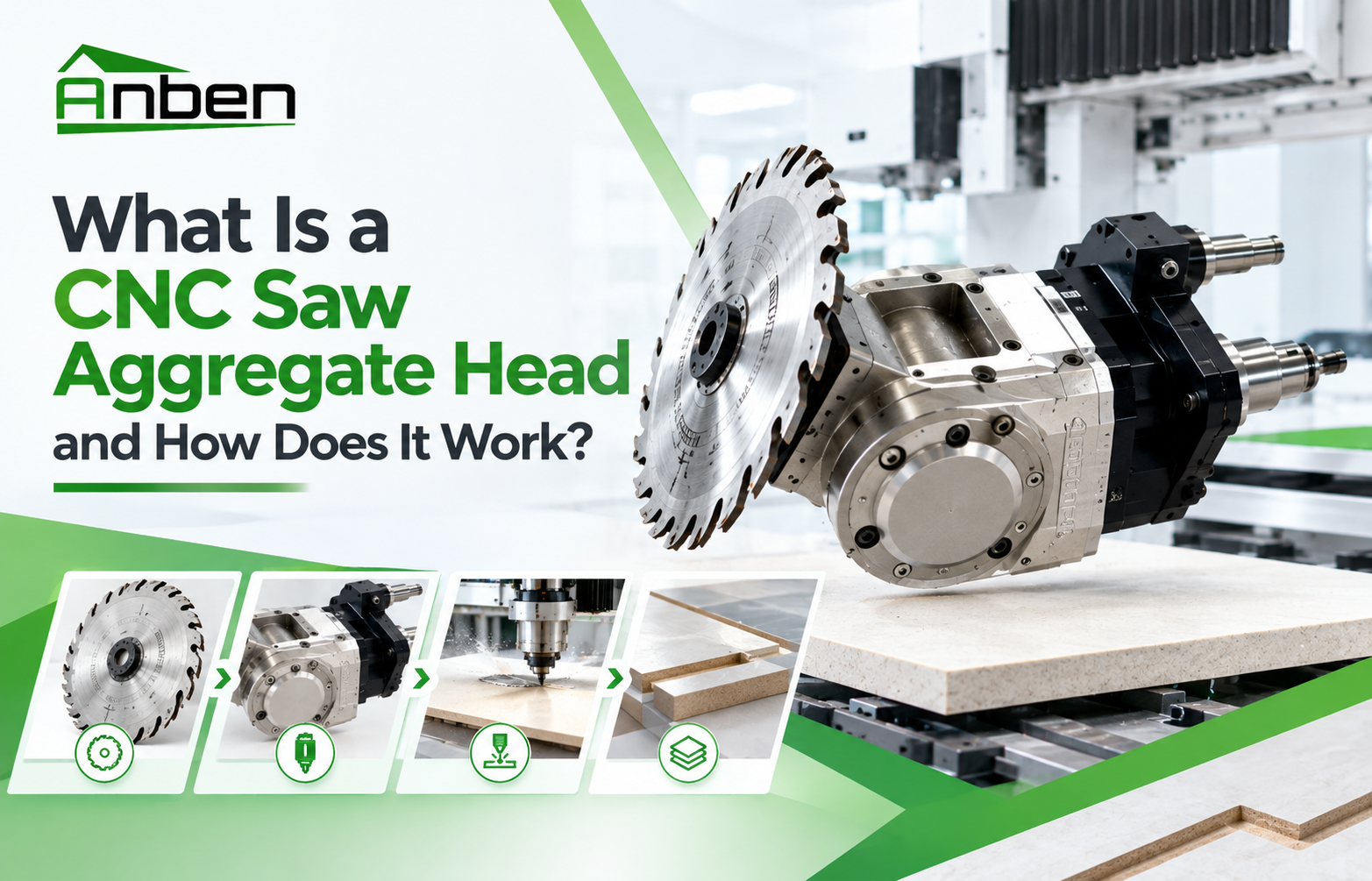
- What Is a CNC Saw Aggregate Head and How Does It Work?
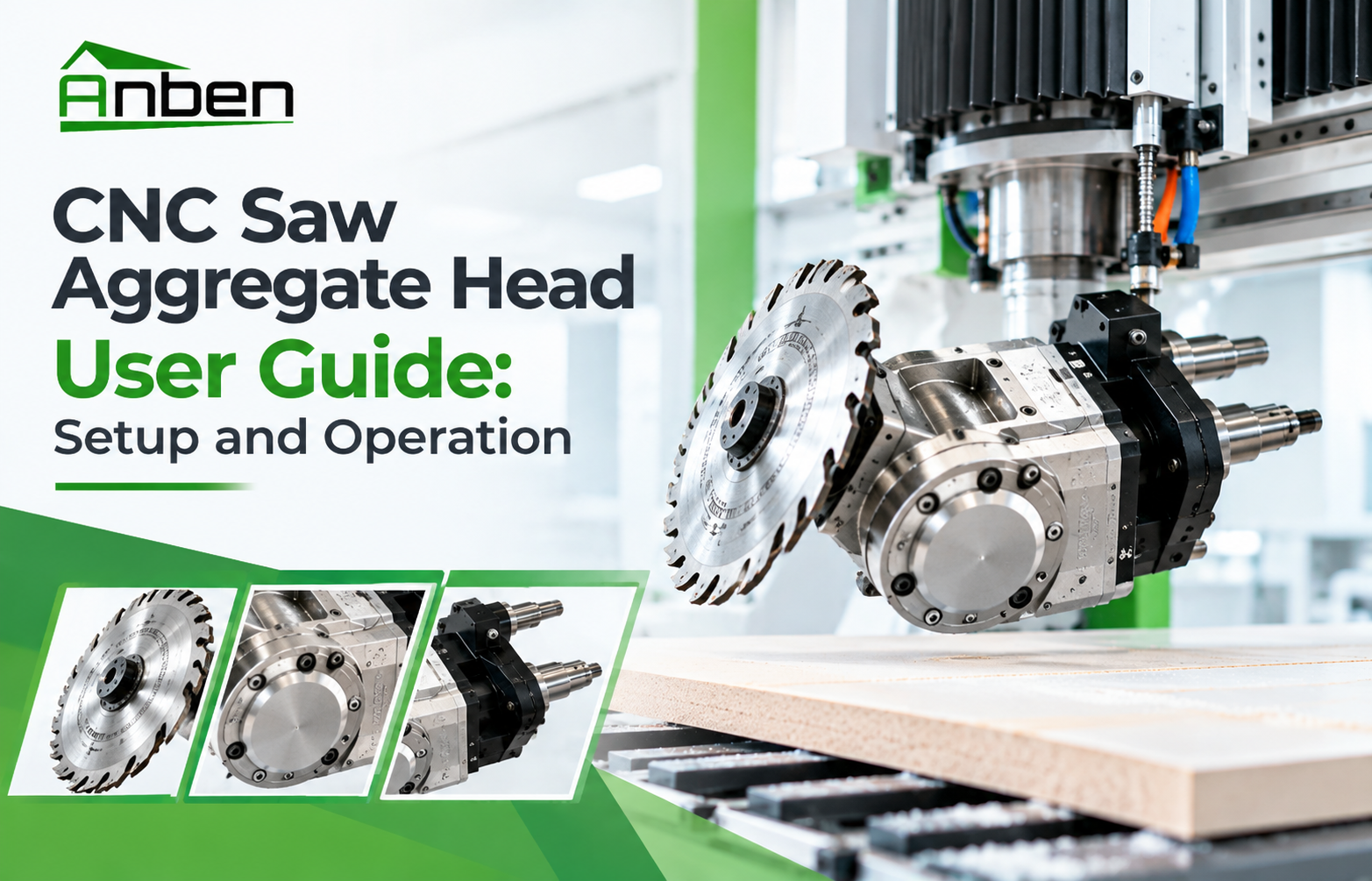
- CNC Saw Aggregate Head User Guide: Setup and Operation
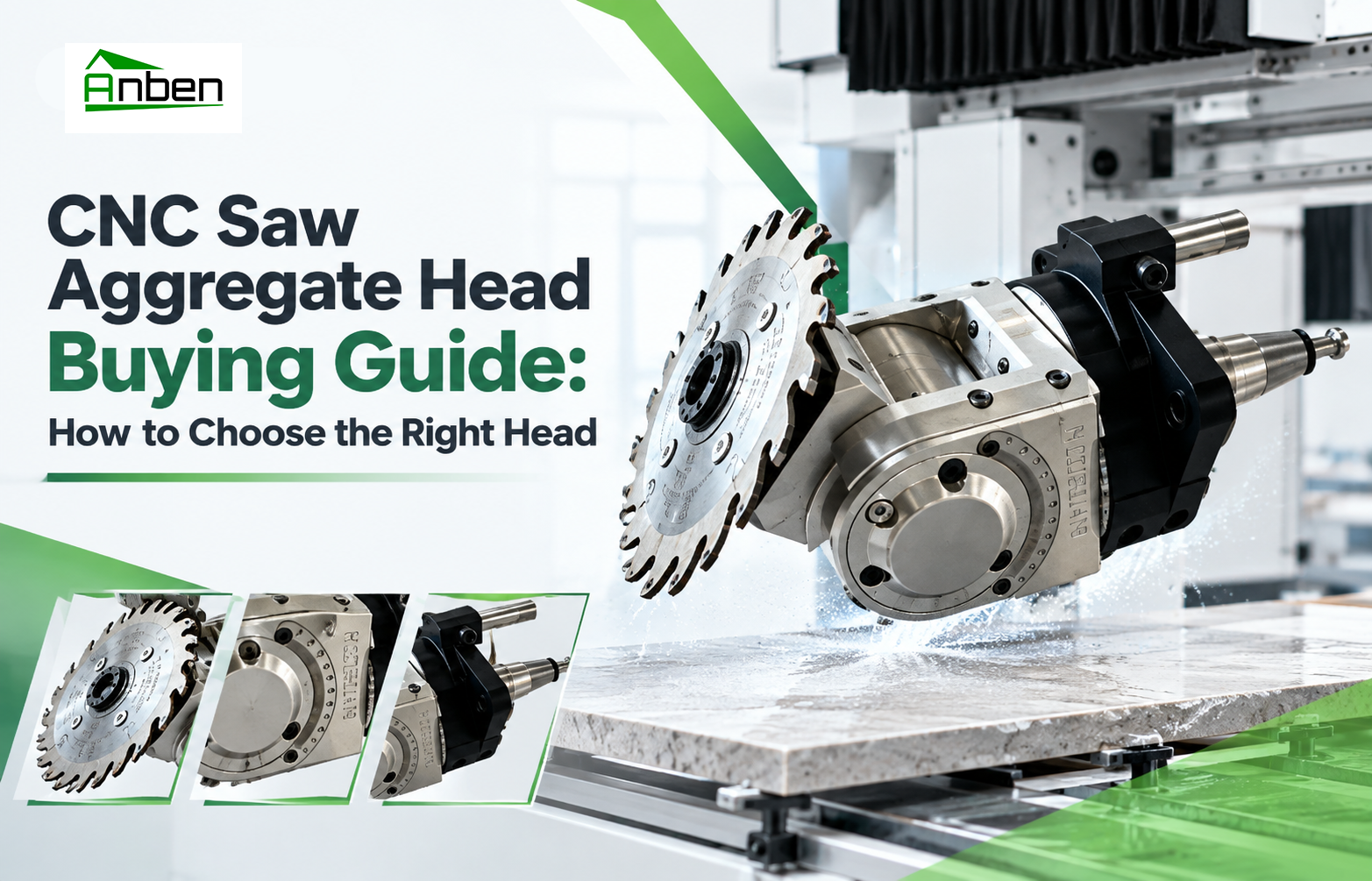
- CNC Saw Aggregate Head Buying Guide: How to Choose the Right Head
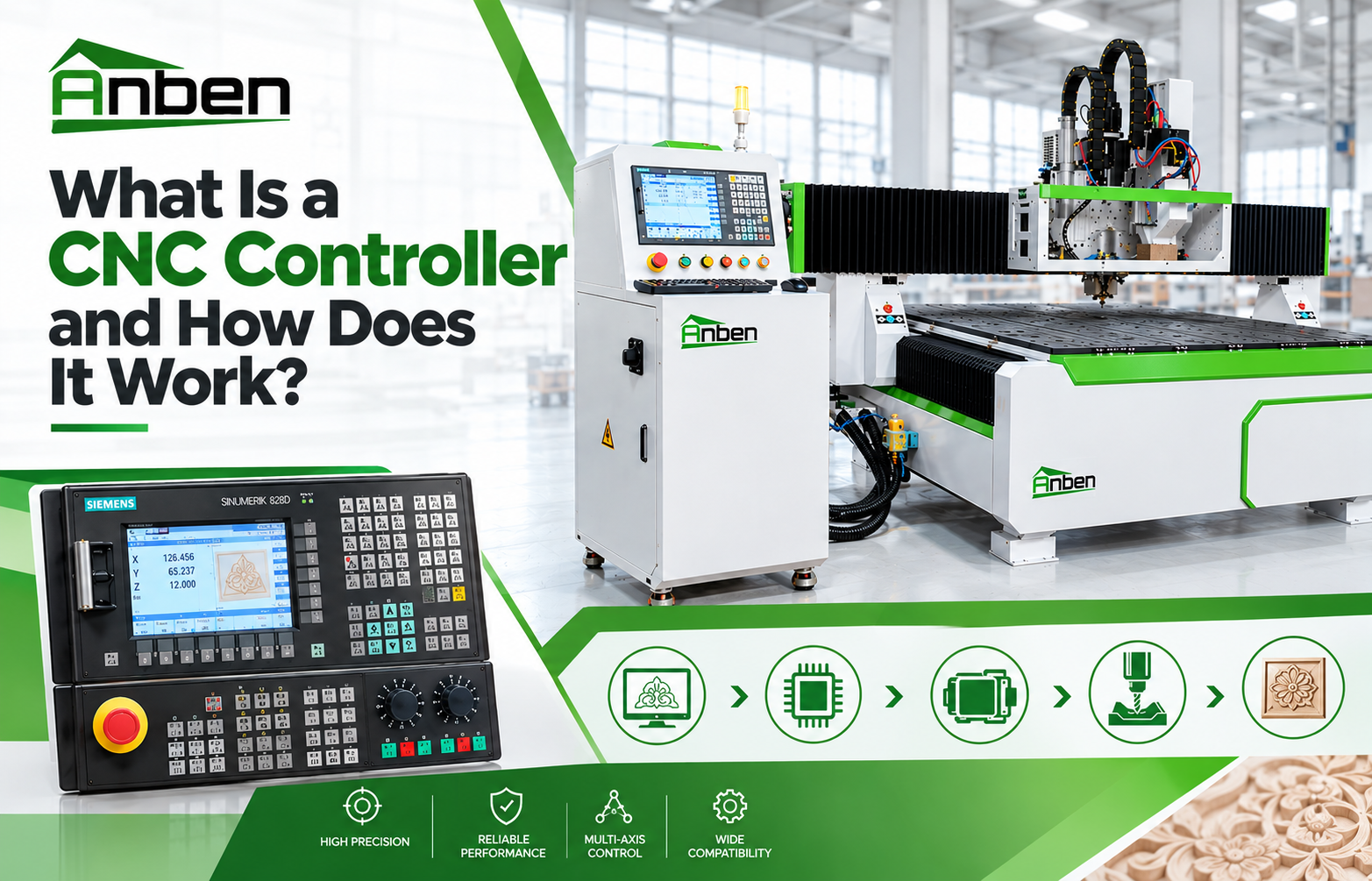
- What Is a CNC Controller and How Does It Work?
Related Products
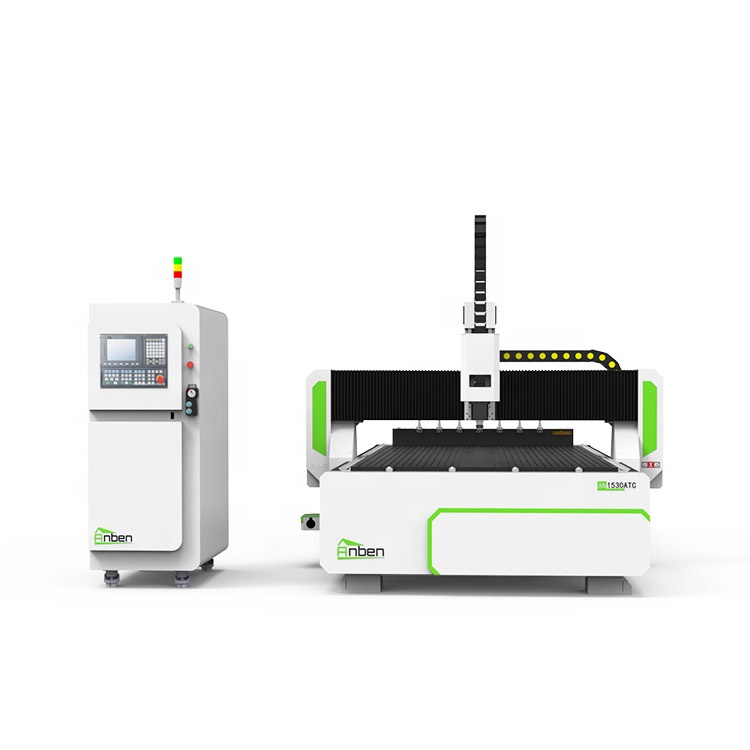
 AN1530ATC Automatic Tool ChangeAnben ATC (Automatic Tool Change)CNC router is popularly used in woodworking, making signs, molds making, art crafts making, etc. The automatic tool changer magazine carries 8-16 cutters. It can save tool change time,more efficient!
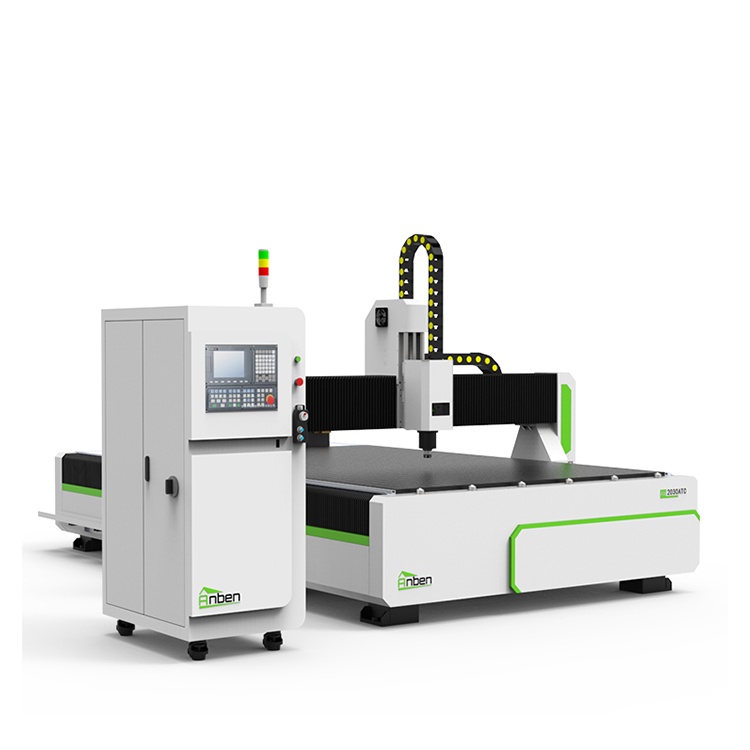
 AN2030ATC Automatic Tool ChangeAnben ATC (Automatic Tool Change)CNC router is popularly used in woodworking, making signs, molds making, art crafts making, etc. The automatic tool changer magazine carries 8-16 cutters. It can save tool change time,more efficient!
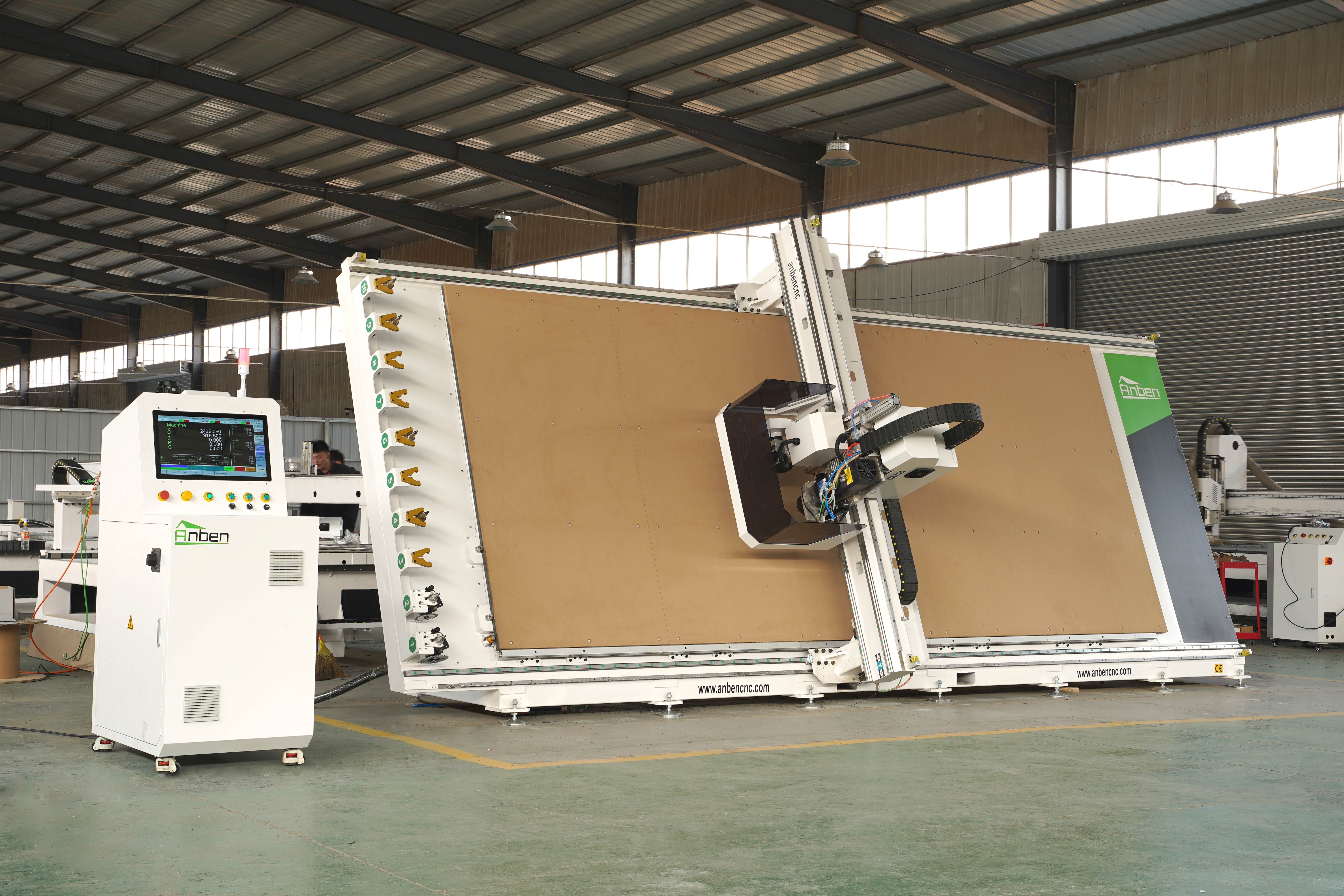
 V-2151 Vertical cnc routerThe vertical cnc significantly reduces the machine’s floor space. It is equipped with 8 sets of ATC tool magazines and other auxiliary devices such as vacuum pump, saw blade,aggregate head, positioning systems, etc. The Vertical cnc can cutting,grooving,engraving,drilling for various types of aluminum composite boards, acrylic boards, fiber boards and other boards. It is suitable for construction facades,cladding ,advertising signs,furniture manufacturing and other industries.
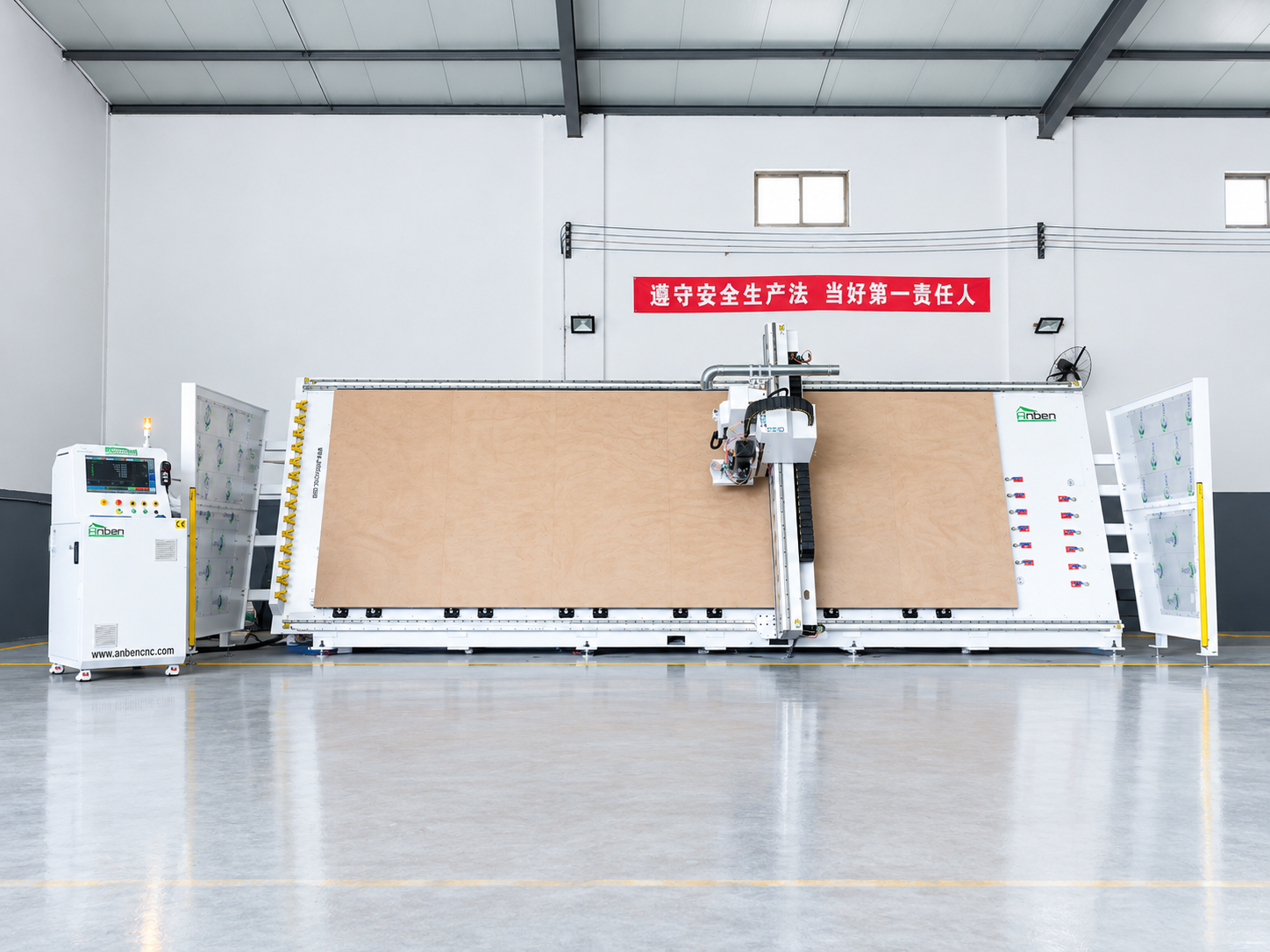
 V-2162 Vertical cnc routerThe vertical cnc significantly reduces the machine’s floor space. It is equipped with 8 sets of ATC tool magazines and other auxiliary devices such as vacuum pump, saw blade,aggregate head, positioning systems, etc. The Vertical cnc can cutting,grooving,engraving,drilling for various types of aluminum composite boards, acrylic boards, fiber boards and other boards. It is suitable for construction facades,cladding ,advertising signs,furniture manufacturing and other industries.
Get in touch

Anben Industrial – Founded in 2017, with a pure engineering spirit, providing trustworthy CNC solutions, born for long-term stable performance.
Contact